
Summary
One of the oldest and most useful methods in the production of fabrics is weaving. It is a process which is used to make cloth by interweaving two different sets of yarns at cross-purposes. This is an organized approach that has molded cultures, boosted industries and developed cultural identities over a thousand years. Weaving has been one of the main pillars of textile production, as it started with the rudimentary handlooms, and continues to the more sophisticated automated looms.
In this article we are going to discuss What is weaving in the textile industry?, how it is to be done, the various weaves that are used in producing textiles and how patterns or patterns used in textile production such as Indian weaving pattern and traditions of textile production have impacted the world in terms of fashion and design.
Introduction
Textiles are essential in our daily life in terms of clothing and furniture and in industries as well. Weaving is one of the most stable and systematic methods of making fabric among other techniques. Nonetheless, What is weaving in textile?
The most fundamental way of weaving is simply the interlacing of warp (lengthwise yarns) and weft (crosswise yarns) to create a piece of fabric. The interlacing forms powerful, multifunctional fabrics applied in an innumerable number of applications. The art of weaving textiles has since developed over time, and nowadays it is highly mechanized, but the principle has remained the same.
Learning how to weave makes us value not only the art of fabric construction, but the range of techniques, textures of surfaces and cultural craftsmanship in the form of the woven material.
What is weaving in textile?
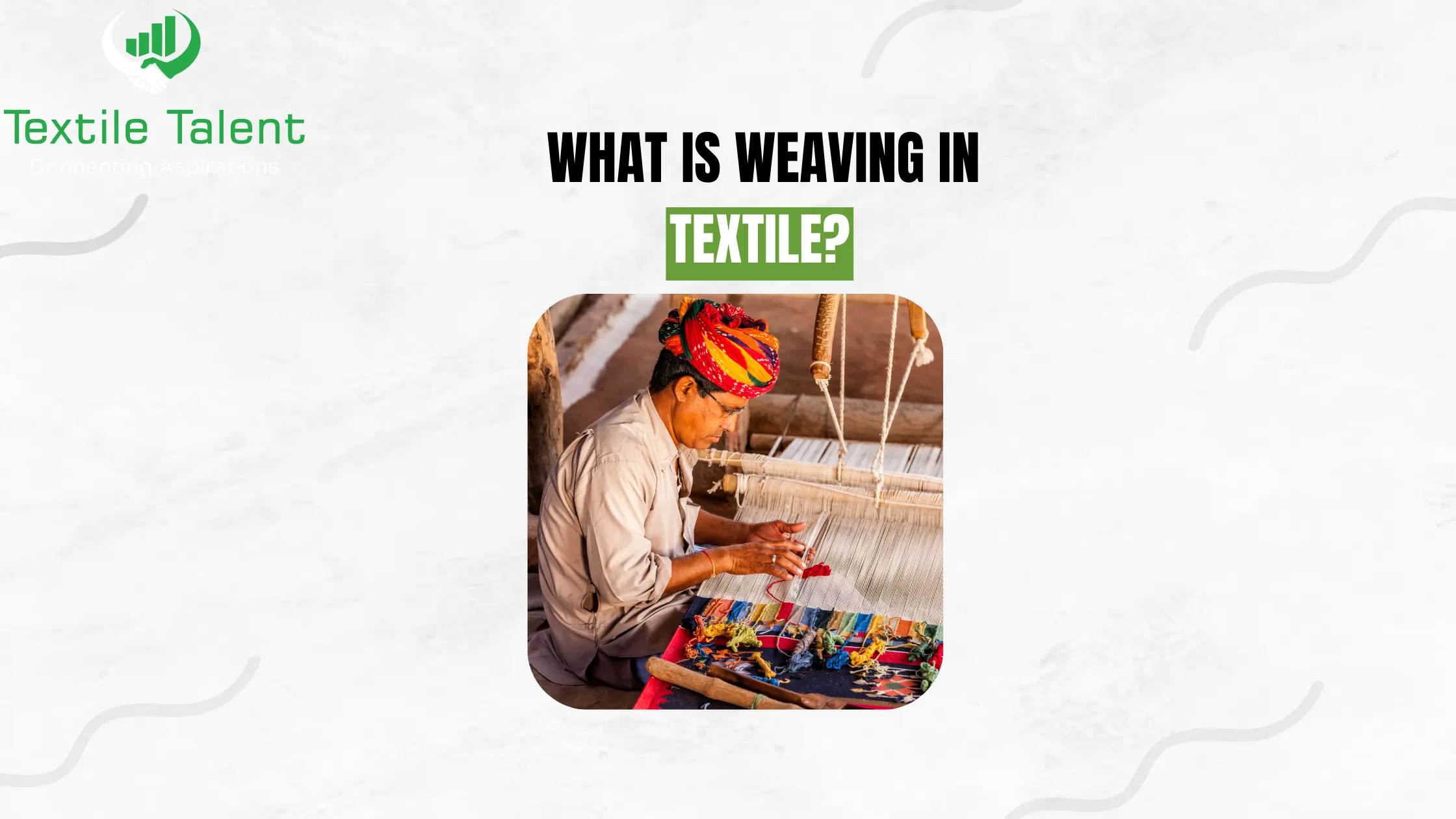
What is weaving in textile? It is a technique of making fabric in which two groups of yarns—warps and wefts are crossed at right angles with the help of a loom. The warp yarns are stretched on the loom and the weft yarn is thrown over and under the warp in a given pattern. This organized interweaving forms stable and firm fabrics.
Using weaving, manufacturers can control the texture, thickness, strength, and appearance of the item by changing the type of yarn and interlacing method. It is the basis of textile weaving culture all over the world and is still common in both crafts and machine production of fabrics.
Warp and Weft
Warp yarns have their effect in length of the fabric and are framed in tension during weaving. These strands give the cloth its structural support and they should be sturdy to support the weaving process.
Welt yarns are laid in the horizontal direction of the warp. They are embroidered with the help of a shuttle or a mechanical tool and predetermine the texture and the design of the fabric to a great extent. The way the warp and the weft interchange determines the structure of the fabric.
Role of the Loom
Loom is the machine or tool which is used to weave fabric. There are the traditional handlooms, which make use of the manual skill but the modern looms are computerized to be faster and precise.
The loom is a machine that separates threads of the warp to form a shed through which the weft thread goes. The threads are beaten after every insertion thus forming a tight and consistent fabric structure.
Textile Weaving
Weaving of textiles is a technical and an arts process. It uses mechanical accuracy with artistic design to make fabrics of different degrees of complexity. The method can make simple cotton cloth or complex brocades using elaborate designs.
The modern textile weaving serves industries like fashion, upholstery, automotive textile and technical fabrics. Loom technology has resulted in faster production with quality and accuracy of patterns.
Read Also: Viscose Rayon Fabric Good or Bad: Explained!
Traditional Textile Weaving
The old fashioned weaving is based on manual knot machines and master hand weavers. This method tends to create special fabrics that have cultural meaning. The patterns, color blends and motifs are also done by hand, so every piece of work is unique. The art of handwoven is appreciated because of its authenticity and handwork.
Modern Textile Weaving
Present weaving involves power looms and computer programs. The machines are able to make intricate designs efficiently and in large scale.
Automation guarantees consistency, saves time in production, and makes it possible to produce in large quantities, which would be impossible with manual production.
Types of Weave in Textile
Knowledge on the kind of weave in the production of textile can be used to determine the properties and use of fabrics. The weaving styles vary and influence the feel, strength, elasticity, and appearance.
The woven fabrics all over the world are based on the most widespread weave structures. Every type of weaving defines the interaction between warp and weft yarns.
Plain Weave
The most basic and the most widespread one is plain weave. The weft is then woven over and under the warp threads in an alternative fashion.
It is a weave that creates powerful and robust fabrics like cotton shirting and muslin. It is balanced in appearance and hard in texture.
Twill Weave
Twill weave provides a diagonal effect to the fabric. The weft overcomes several warp threads, and then it crosses over a thread or several threads.
This framework results in the creation of looser and easy-going fabrics such as denim and gabardine. Twill materials tend to be more anti-wrinkle.
Types of Weaves in Textiles
When discussing the changes in the weave in the textiles, we need to know the functional and aesthetic effects of the variation of weave. Simple weaves are used as the base but the sophisticated variations provide ornamental flexibility.
Various weaves vary in the drape, texture, durability, and thickness.
Satin Weave
Satin weave is designed in such a way that the weft can pass over multiple warp threads and then interlace. This produces a glossy surface.
Satin materials are gentle and luxurious and can snag easily as a result of long yarn floats.
Basket Weave
Basket weave is a type of weaving in which a warp and weft are combined in pairs or more.
It is a textured structure, which is frequently utilized both in domestic textiles and furniture.
Textile Weaving Patterns
Textile weaving patterns are the visual patterns used on textiles that are produced in the form of a certain interlacing pattern. These patterns may be geometric, floral, abstract or symbolic. The development of patterns relies on the settings of the looms, the color of the yarns as well as the weave structure.
Patterned weaving allows designers to come up with unique fabrics on fashion and interiors and makes it more aesthetically pleasing.
Geometric Patterns
Structured shapes like stripes, checks, and diamonds are used as geometric patterns. Such designs are done by changing the arrangement of colors or weaving patterns.
They find extensive application in clothing and home furnishing fabric.
Decorative and Motif-Based Patterns
Patterns that are based on motifs tend to have cultural/symbolic significance. Traditional motives and flowers are directly interwoven into the fabric.
These patterns need planning and sophisticated methods of the loom.
Indian Weaving Textile Pattern
The traditions of Indian weaving textile patterns are famous because of their complicated patterns, rich colors, and symbolism of the culture. Weaving has been a very ancient practice in India. A unique style and technique are peculiar to every region.
Indian textiles have their history, artisans and artistic identity in terms of silk brocades, cotton handlooms, etc.
Banarasi and Kanchipuram Weaves
The Banarasi silk is known to have rich floral and Mughal influenced designs with the use of gold and silver thread. Kanchipuram silk has a contrasting border or rich texture.
These patterns are mostly worn as a ceremonial and wedding dress.
Ikat and Jamdani Techniques
In Ikat, the dyeing is done on yarns before weaving in order to create blurred artistic patterns. Jamdani is a weaving that is characterized by exquisite designs that are in woven fine muslin.
The two methods reflect great expertise and sharp craftsmanship.
How Does Weaving Impact Fabric Quality?
The fabric performance is directly concerned with the weave structure. The strength and durability are a product of the interlacing density. In tighter weaves, firmer fabrics are made whereas in the looser weaves, more breathable and soft fabrics are produced.
The quality of fabric will also be determined by the type of yarn used, tension control and finishing.
Durability and Strength
Frequent interlacing in plain weaves normally results in a stronger type of weave. Twill and satin are flexible and can lose some of their stiffness.
Fabric longevity is secured by weaving consistency.
Texture and Appearance
The various forms of weaving produce dissimilar textures over the surfaces. The texture of satin and basket weave is smooth and soft respectively.
The weave selected has a large effect on the final appearance and touch of the fabric.
Why Is Weaving Important in the Textile Industry?
Weaving is vital since it yields consistent and multimodal fabrics that can be used in innumerable ways. Woven textile is used in industries to produce clothing, upholstery, industrial products and even in technical applications such as airbags.
Efficiencies in textile weaving technology have also been developed, which have maintained the artistry in the past.
Industrial Applications
Automobile interiors, medical fabrics and construction fabrics involve the use of woven materials. Their stability and strength are perfect attributes to be used in heavy-duty applications.
Technical textiles also tend to rely on weave patterns.
Cultural and Artistic Significance
Outside the industry, weaving is a culture. Numerous groups of people keep the traditions of handlooms as a sign of identity and artistry.
Such traditions still serve the world fashion trends.
FAQ
1. What is weaving in textile?
Weaving is the art of entwining warp and weft strands at angles right of each other, to produce fabric with the help of a loom.
2. What are the main types of weave in textile production?
The most common ones are plain weave, twill weave and satin weave.
3. How is textile weaving different from knitting?
Weaving involves the use of two sets of yarns perpendicularly to each other whereas knitting involves a single set of yarns to make loops.
4. What makes Indian weaving traditions unique?
The Indian weaving traditions are characterized by elaborate designs and rich colors, as well as by the local methods of weaving, including Banarasi silk and Ikat.
5. Why is weaving important in modern textiles?
Weaving results in good, flexible fabrics that can be used in clothing, home decoration and in industry.