

This article is a detailed study of Lappet weave cloth which is a specialty textile with embroidery-like raised surface patterns. We explore the mechanical complexities of the way it is made on a loom, its Indian origins in the history of the textile industry, and its functional excellence in use such as curtains and luxurious fashion. At the close of this guide, the readers will be able to see why this particular weave is still a favorite among those who want to touch and feel luxury and enduring decor.
Introduction
The Lappet weave fabric is one of the accomplishments that testify to the bridge in the diverse world of textile engineering weaving and embroidery. Historically employed to produce lightweight, motiflike decorations that are delicate and floating ground cloths, this cloth has a three-dimensional texture that is not only appealing to the eye but also structurally sound.
In contrast to prints that lie flat on the surface, or the conventional embroidery that is appliqued over the fabric afterwards, lappet designs are finished, woven into the weaving process. This special way of production makes sure that the decorative elements are well-grounded, and the fabric is the perfect choice for luxury home interiors and crafted clothes that need a bit of class.
What is the process of weaving a lapper weave?
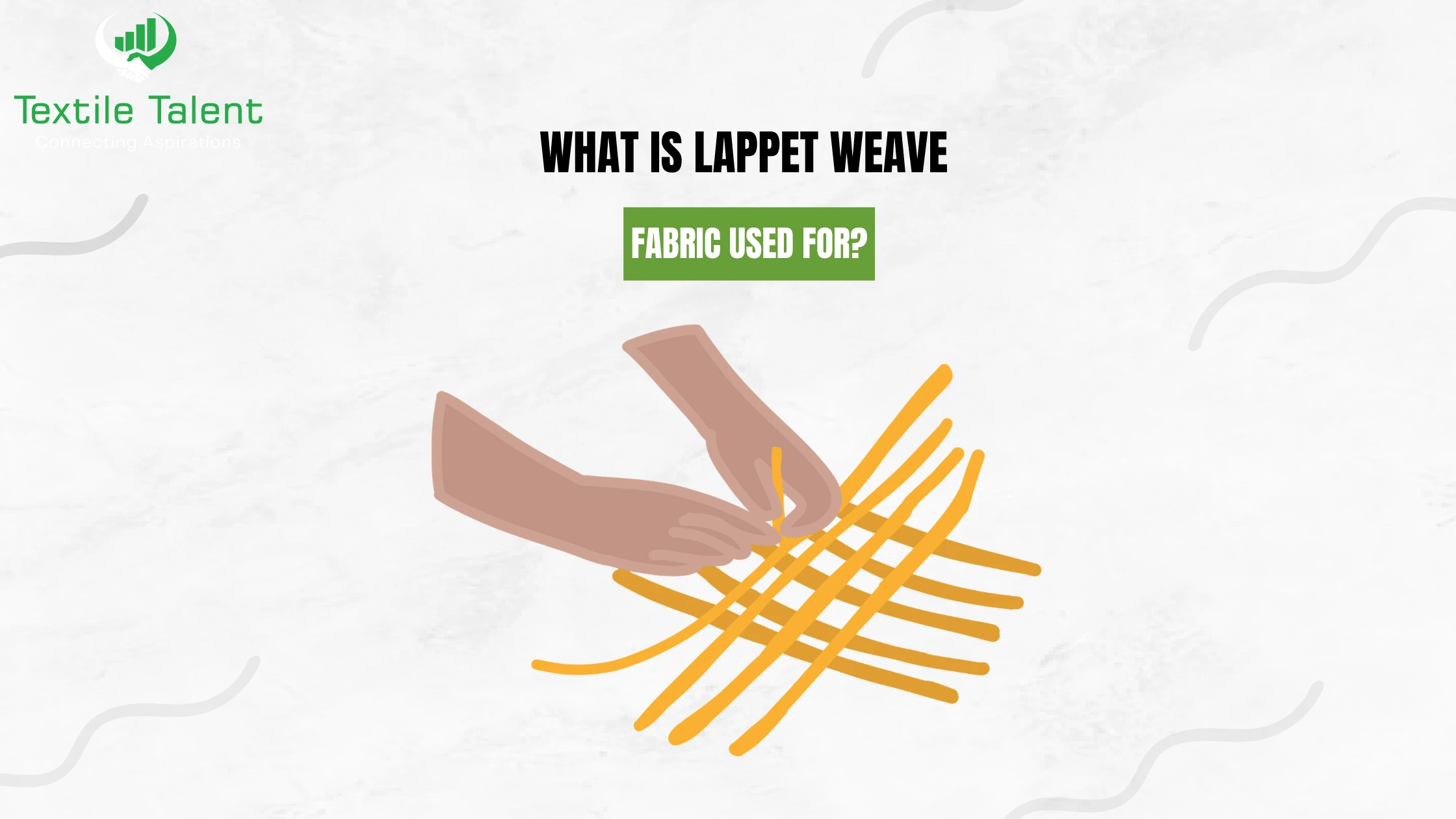
Lappet weave fabric is made by a special mechanical attachment called a lappet bar, in which are a series of needles. These needles move horizontally during the weaving cycle around the warp strings, "stitching" in another set of ornamental threads into the ground material as the weft passes through.
In this way, it is possible to create complex, zigzagging, or flower-like patterns to be worked in on the ground cloth. The lappet, in contrast to the swivel weave, utilizes an additional weft technique that employs additional warp strings to create its typical lappet weave pattern, creating a cleaner finish and few bulk on the back of the material.
The Needle Bar Role
The main factor determining the pattern's complexity is the needle bar. It shifts laterally between shedding and picking of the loom, to place the decorative threads in the exact spot the pattern requires. Multi-colored or tiered designs can be made by using multiple bars, permitting a degree of elaboration that apes hand-woven work but with the speed and regularity of machine-made work.
TENSION and PATTERN INTEGRITY in WARP
This is one of the most important things to be considered in lappet work, to take the proper tension of the decorative warp threads. When the tension is excessively loose, the loops are likely to snag, and when they are overly taut, then the base fabric will pucker.
To make sure that the extra threads do not spoil the result, master weavers modify the let-off mechanism of the threads. Motifs are sewn directly to the ground cloth which helps save the integrity of the whole cloth.
Indian lappet weave
India has been a world center of innovation in the field of textiles, and the application of Lappet weave cloth is a part of it important role in the history of manufacturing in the country.
In the late 19 th and early 20 th centuries, Lappet technology became popular in Indian mills and handloom centers to imitate the hand-woven, which was very costly Jamdani patterns. This enabled mass production of the well decorated muslins and cottons which had been hitherto the province of the elite.
This technique was modified to conserve traditional Indian motifs as they shift the industry more into a more modernized, efficient production model that would compete on the international scene.
DEVELOPment of handloom to power loom
The shift of lappet weaving off wooden handlooms to high-speed power looms in India was a breakthrough significant change in the availability of decorated fabrics.
Artisans in such regions as Bengal and Tamil Nadu combined these mechanical aids to hasten the production of sarees and dhotis with decorative borders. This evolution made sure the language of Indian textiles remained graphic and abundant even as the world moved toward industrialization.
MOTif conservation of the 'BUTI'
The 'Buti' or little flower sprig is an Indian staple. The main technique was Lappet weaving to make these little, repetitive designs in large quantities of fabric.
The process of lappet was because it was more economical than manual embroidery, and enabled the Buti to be a popular element in the daily Indian attire, establishing it as a cultural icon in the textile industry.
What is the difference between lapper weave curtains and other ones?
In the case of interior design, Lappet weave fabric is a very demanded type of fabric used in window treatments to its peculiar filtering action of light.
Lappet-woven curtains give a better appearance than the printed ones, a shade of richness and elegance that flat colors will never present. In comparison with heavy jacquards, lappet curtains are much lighter and airier, so they are ideal for creating a shabby chic or classic Victorian beauty minus the burden of heavy tapestries.
The manner in which the raised threads receive the light gives a smooth, glittery impression to any room that makes it more confidential and a pleasant experience, with a sophisticated decorative touch.
DURABILITY vs. STANDARD EMBROIDERY
One of the greatest benefits of lappet curtains compared to the embroidered with post-production is the fact that they are resistant to unravelling.
The decorative threads are fewer because they are woven in the structure of the ground cloth has a tendency to drag or snarl when cleaning it. This renders them a more viable option with high traffic pets, in areas or homes where surface-level embroidery would be easily damaged.
The Aesthetics of Floating Patterns
The appearance of the motifs floating is the defining feature of lappet curtains. Unlike dobby weaves in which the design is comprised of the weave structure, lappet designs shine in relief.
This creates a sense of touch to the homeowner and aesthetic appearance that would challenge the costliest custom-produced high-end appearance drapery at a more affordable cost.
Contemporary usages in Fashion and Decor
Modern Applications in Fashion and Decor
Today, Lappett is still used as a weave in modern fashion particularly during spring and summer collections. It can give such detailed descriptions to lightweight fabrics such as lawn or voile, rendering it a favorite among designer blouses, children christening gowns and fine scarfs.
In the world of home decor, past curtains, it is also becoming popular in luxury bedding and table runners in which the texture of the weave can be appreciated up close. The flexibility of the technique enables designers to play with the modern geometrical shapes, and this ancient technique has not lost its use in the 21st century aesthetics.
GREEN and environmentally friendly trends
With the shift of the industry towards sustainability, lappet weaving is reconsidered as a low-waste option to traditional embroidery. The patterns are made in the course of weaving hence there is no need for secondary chemical stabilizers or over-waste of thread used in industry embroidery machines.
This has become completely compatible with the rising trend of slow fashion and responsibly manufactured textiles.
Boutique interiors Customization
Interior designers are also placing orders of small lappet weaves in small batches to use in boutique hotels high-end residential projects. The skill of producing a special lappet weave pattern that is distinct to a specific project enables the amount of exclusivity that is highly appreciated in the luxury market.
This trend is reawakening the enthusiasm of technical expertise to work and maintain special lappet looms.
Frequently Asked Questions (FAQ)
1. Does Lappet weave equal Jacquard?
No. Jacquard is the thread that controls the warp in individual threading to form the cloth structure itself, and Lappet weaving, an attaching to add ornamental threads on top of a simple ground weave.
2. May I use a machine to wash Lappet weave curtains?
Yes, as a rule, when they are made of cotton or synthetic mixtures. Nevertheless, the best thing is to use a washing bag and a light wash to ensure that the raised threads do not hook on the machine’s agitator.
3. What is the name of this weaving, why is it called Lappet?
It is so named because of the "lappet" or needle bar, which returns the additional warp threads and over the piece of cloth in the weaving.
4. Does the pattern appear on either side of the cloth?
Only the face of the fabric can be seen of the primary design. Small will be on the back where the decorative thread was taken by the weft, but is not, anchor" points reflect the front design.
Look at our services if you are looking for a textile jobs in India.