
Summary
One of the most widely used fabrics in the production of apparel is rib knit that has properties of stretch, recovery and is available in a textured look. This guide discusses how ribs are made, why they are utilized in various types of clothing as well as how they are compared to other knit structures. You will also find out about fibers, care and benefits, restrictions and the most frequent uses as well as practical FAQs so that you could comprehend this practical material deeper.
Introduction
The aspect of knitted fabrics is significant in the textile sector as it offers comfort and flexibility. Of these, constructions made of ribs are characterized by their elasticity and resistance. Many people ask what is rib knit fabric and why it is used so extensively in cuffs, collars, activewear, and everyday clothing. The article is well explained with a comprehensive explanation and is thus applicable to designers, manufacturers, students and people who are interested in knowing more about the same.
What Makes Rib Knit Fabric Unique?
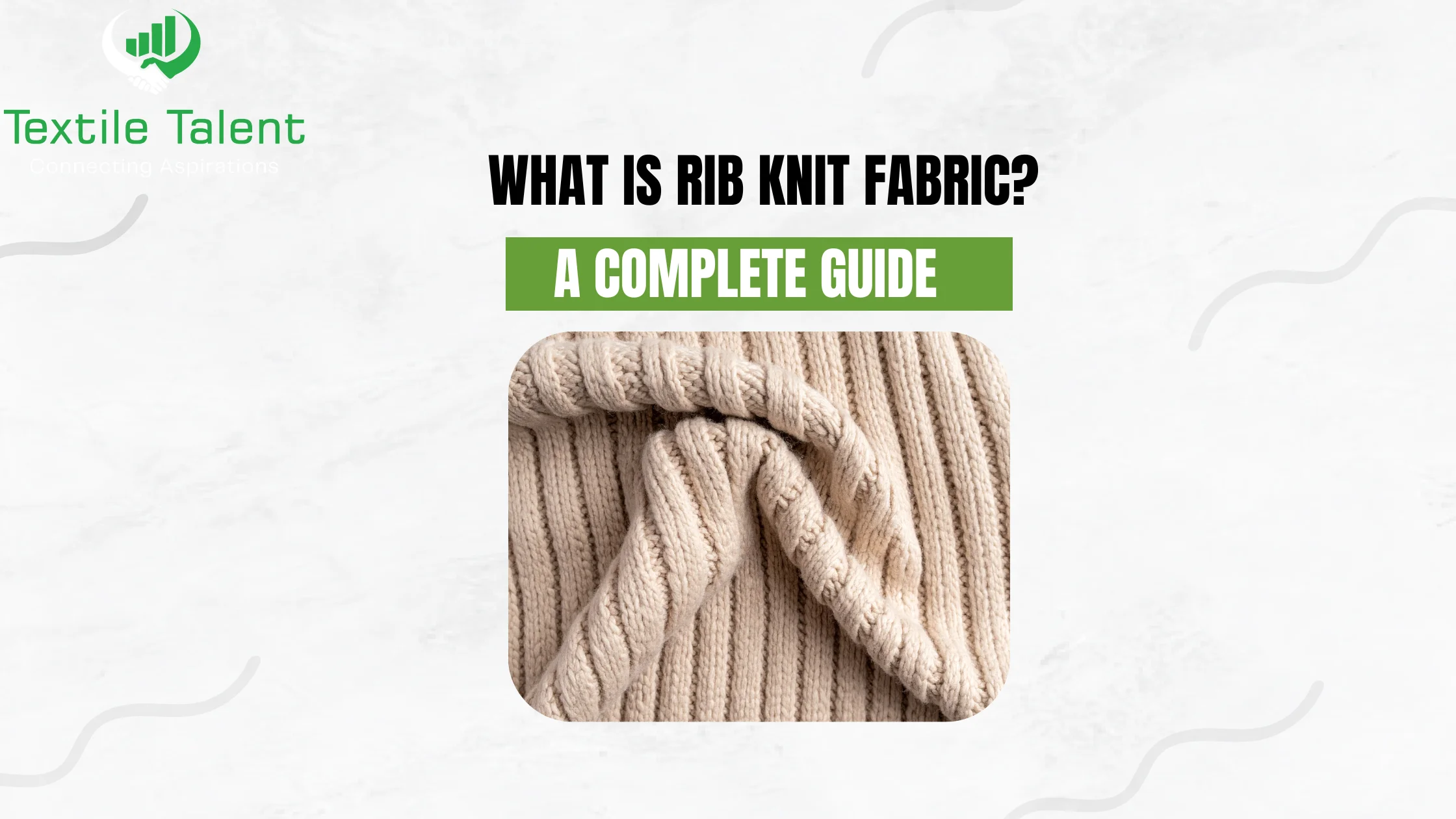
The rib knit is characterized by vertical ribs, which are formed by the use of alternating knit and purl stitches. This arrangement enables the fabric to stretch considerably in the width of the fabric though with good retention of shape. It is particularly appreciated in clothes that have to be flexible and retain their shape. Due to its balanced structure, it is comfortable and strong enough to be used as casual clothing, sportswear, and practical clothes.
Structure and Construction
Rib structure Knitting machines are used to form the rib structure by using two sets of needles that create lifted and depressed lines. Such interlacing technique makes the fabric thicker and more stable than plain knits. Both sides have the vertical ribs and therefore the fabric can be worn as a reversible one in most instances.
Visual and Tactile Qualities
The ribbed texture gives the surface a unique feel which makes it look and hold better. It is comfortable though rigid enough, and it is why it is commonly applied to places that have a lot of movement or friction.
How Is Rib Knit Fabric Manufactured?
The process of manufacture is based on the use of special knitting skills not similar with the flat or jersey knits. Care and accuracy in the choice of the yarn are essential to the required elasticity and durability.
Knitting Techniques
Rib fabrics are normally created either on the circular or flat-bed knitting equipment. The most prevalent ones are the 1x1, 2x1, and 2x2 rib patterns meaning the sequence of knit and purl stitches.
Yarn Selection
Fibers used will depend on the purpose intended. For example, cotton rib knit fabric is popular for breathable and skin-friendly garments, while synthetic blends are chosen for performance wear requiring higher elasticity.
Where Is Rib Knit Fabric Commonly Used?
This cloth is used in a vast variety of goods because of its useful and aesthetic qualities. It can be used by designers both structurally and ornamentally, which is how it is so versatile.
Apparel Applications
Ribbed knit fabric is commonly found in cuffs, waistbands, necklines, socks, and fitted garments. It is used to keep clothes in place, and also, ease of movement, therefore, it is best in fashion and utility clothing.
Home and Industrial Uses
In addition to clothing, rib structures can be applied in upholstery trims, mattresses, and technical fabrics where stretch and recovery are needed.
Fabric Rib Knit vs Other Knit Structures: What’s the Difference?
To know the comparison of rib with other knit fabrics will help in choosing the appropriate material in particular requirements. All knits have stretch but behaviour and performance are different.
Rib vs Jersey Knit
Jersey knits are also lighter and smoother but they are more likely to curl along the edges and do not recover. Contrarily, the ribs are heavier, more elastic and do not bend which makes them more secure when it comes to garment edges.
Rib vs Interlock Knit
Interlock knits Interlock knits are double-knit that have a smooth surface on both sides. Rib fabrics are wider stretching and more appropriate to fitted or stretchy garment portions.
Why Is Knit Fabric Ribbing Important in Garments?
Knit fabric ribbing plays a critical role in garment performance, especially in areas requiring stretch and reinforcement. Not only decorative, it is very functional.
Fit and Comfort
Ribbing will help clothing to fit the body in such a manner that it does not feel confining. This enhances wearability and comfort in movement.
Durability and Shape Retention
Ribbing is also able to stretch and recover back and again, which is the reason why the garment stays in shape even when it has been washed and worn frequently.
Advantages and Limitations of Rib Knit Fabric
The rib constructions, as any textile, have their strong and weak sides which should be taken into consideration.
Key Advantages
The fabric offers excellent elasticity, good breathability (depending on fiber), and a structured appearance. It is also relatively easy to sew compared to finer knits.
Potential Limitations
The rib fabrics are more frequently heavier than plain knits and might need more yarn, raising the costs of production. They may also become elastic when they are not taken care of.
How Should Rib Knit Fabric Be Cared For?
Garments constructed in the form of ribs last longer when well taken care of. Although the care requirements are specific to each fiber, there are general guidelines.
Washing and Drying
Elasticity should be maintained by gentle washing and air drying. Fibers may be damaged by high heat and shrink or become distorted.
Storage and Maintenance
Hanging should be avoided and instead folded to avoid stretching. Washing machines should never be loaded with much to minimize stress to the cloth.
FAQ
Q1: Is rib knit fabric suitable for all seasons?
Yes, according to the choice of fiber and thickness. The lightweight types are applicable during the hot seasons whereas the thicker types are applicable during the cold seasons as they act as insulators.
Q2: Can rib knit fabric be used for entire garments?
Absolutely. Although most commonly applied to trims, dresses, tops, leggings, and loungewear are also popular because of its comfort and stretch.
Q3: Does rib knit fabric shrink easily?
Squeezing is dependent on the content of fibers. Natural fibers can become smaller when subjected to heat, hence it is essential to follow the instructions of care.
Q4: How do I identify rib knit fabric when shopping?
Search and find visible vertical ribs and stretch widthwise. The cloth is supposed to stretch and go back to its initial size.
Q5: Is rib knit fabric beginner-friendly for sewing?
Yes, it is usually less of a pain compared to a very fine knit, in particular, with the right needle and stitch settings.