

What Is the Linen Beetling Process?
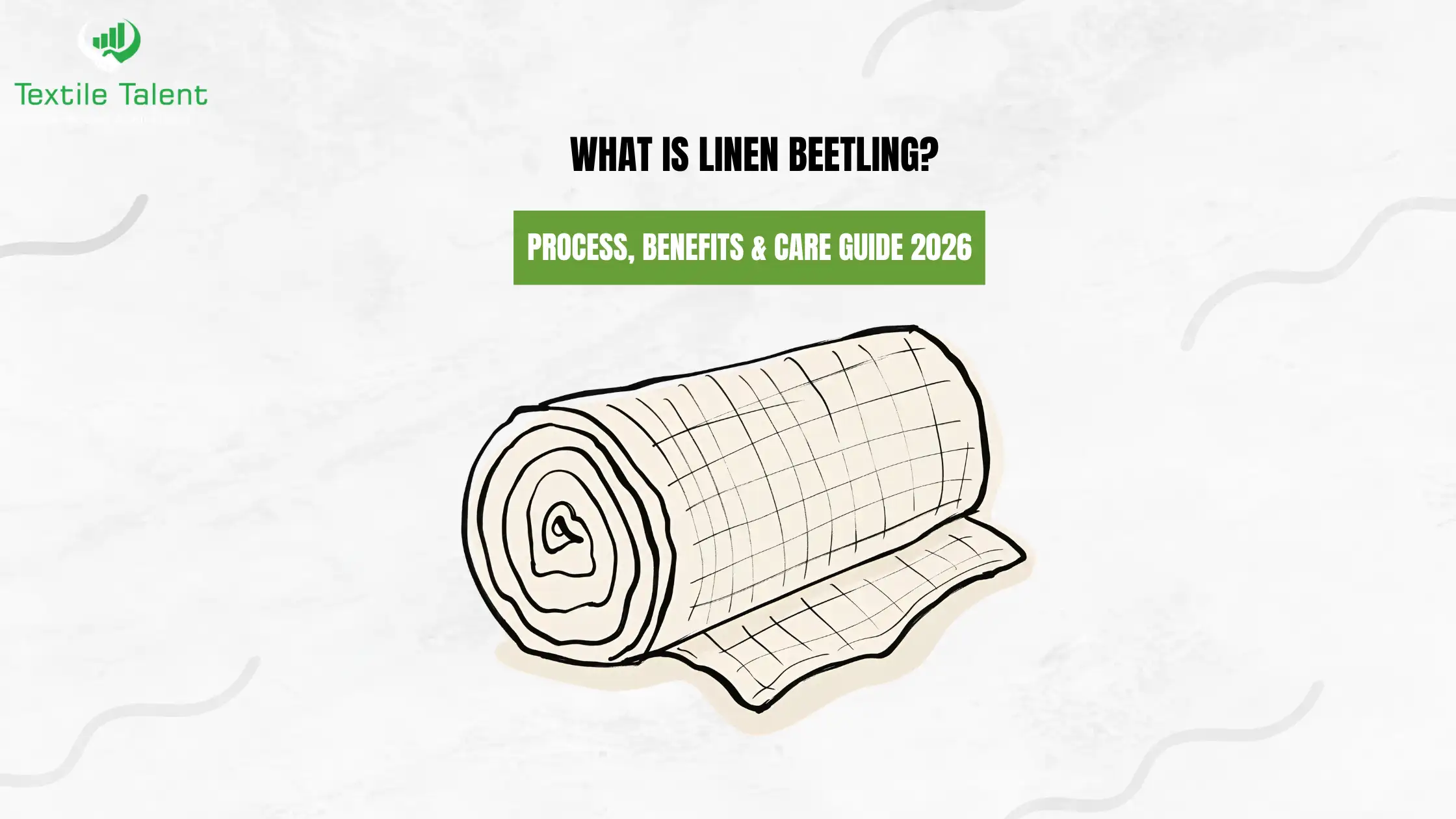
Beetling is a mechanical finish for linen fabric that produces a typically smooth, glossy finish through continuous pounding, without any coating or chemical application. Its name refers to the large flat wooden hammers, or "beetles", used to pound the cloth, rather than anything insect-related! The wooden hammers crush the fabric under heavy pressure, squashing the surface of each individual yarn and flattening and closing the woven structure.
As the technique relies on applying dense pressure, it will only work effectively on tightly woven linen, since the floored fabric needs a strong enough surface to compress rather than bounce off.
Beetling dates back centuries, and was used extensively in Europe during the 1700s and 1800s. In fact, it was used far more frequently than the alternative calendaring process involving circular rolling, which this technique depends on; once widespread, the hammer method. Today, beetling is no longer used as widely as it once was, thanks to more cost-effective finishing techniques and damage to loom operators, although it is still occasionally used for such traditionally crafted products as table linens and high-end tableware.
How the Linen Beetling Process Works
Producing beetled linen involves a sequence of carefully controlled steps:
Soaking
The linen is soaked in water to facilitate dissolution and make the fibers more flexible. This step has to be executed uniformly so that the cloth is textured uniformly and not soaking wet as too much water will cause the cloth to move out of position when pressure is placed on it.
Stretching
The linen, which has become damp, is then stretched tightly over a frame or table, so the hammers have a solid, flat area to hit.
Pounding
Wooden monsters, often 20-30 lbs each, continually hit the cloth surface. Many mills move the fabric under the machine by "steps" to ensure all parts of the fabric receive the same number of blows and develop a uniform sheen similar across the width.
Turning & Inter-rolling
The beating process could last for many hours, and the direction would be regularly changed, so that the entire surface is uniformly flattened and the pressure is spread throughout both the warp and weft yarns instead of just one way. Some mills, which use higher-quality linen, might test a portion of the finished fabric to see how that specific weave would respond.
Finishing check
As pounding continues, fibers become further compressed, and the surface becomes more polished and shiny, with the whole process often recommenced in order to achieve the required finish. Before finishing, finishiness is checked for an even sheen, because uneven moisture content or beating pressure can produce streaks.
Key Advantages of Beetled Linen Fabric
A smoother, Glossier Surface
Beetling gives linen its smooth, shiny surface that makes it desirable for many applications. This finishing produces a softer hand and a more polished appearance that works beautifully for table linen and home furnishings.
More robust
Beating the fibers down during beetling is going to make the fabric more tough against everyday wear and tear, often enhancing the drape too – a definite advantage when using a tablecloth, table runner or napkin that needs to hang properly.
Less shrinkage
Beetled linen generally does not shrink quite as much as some other such as wrinkled linen which is one of the reasons it is chosen for pieces to be washed repeatedly.
Superior dye absorption
As beetling presses the fibers together, rather than coating each individual one, dye adheres more uniformly and produces more complex, long-lasting color even while the linen remains breathable. Due to the extensive preparatory process, textured weave, and the compression applied, the dye reflected off the fabric may appear richer and more even.
Drawbacks of the Linen Beetling Process
Time-consuming
To really get a beetled finish requires a number of hours of continuous beating. Which is why the process is largely confined to specialist and high-end production.
Costly
Special equipment, trained operators and finding the correct moisture content all provide extra costs when compared to more straightforward finishing techniques and because of the time that the process takes it further adds to the cost.
It may stretch or damage unprepared fabric
Affordable raw material such as linen that has not been prewashed could be prone to fiber damage with the hammers, as could mixed and loosely woven textiles. Therefore beetling is usually not recommended as a method of finishing these types of textiles.
Important Precautions for the Linen Beetling Process
Put it through a thorough and even soak
If the fibers aren't softened enough by soaking they will be liable to damage during pounding, also the damp should be absorbed evenly across the full width of the cloth, so that there are no dry patches producing an inconsistent gloss.
Use experienced operators
The quality of a uniform, well-controlled finish depends on knowledgeable operatives. Operators should also check weave density prior to beginning-the finer parts of a weave generally tend to flatten down more for the same amount of pressure that maximum density parts would be subjected to.
Service the equipment thoroughly
Even the beetles require regular servicing and balancing. Even the slightest shaky movement of the beetles may result in uneven strikes to the fabric, thus leaving marks on the surface.
Due to the last process of finishing, examine the fabric carefully
Before the fabric going for sale or other process, the final inspection should check the faults of the fabric that are streaking, broken yarns, and weave structure.
Conclusion
Beetling is one of the most enduring finishing techniques used by the textile industry, long valued as a way of creating a smooth, glossy finish on linen fabric. While time-consuming and costly, the results are worth it - increased strength and stability, less shrinkage, and an improved ability to absorb dye. Use it on stable, close woven, high quality linen where a natural look is required - few finishing methods are capable of producing a more desirable finish.
Frequently Asked Questions (FAQs)
Q1. What is linen beetling in textile finishing?
Linen beetling is a traditional mechanical finishing method for linen which involves pounding the linen yarns to flatten and smooth them. It results in a very smooth and lustrous surface, and is specific to woven linen.
Q2. What are the benefits of beetled linen?
Its hand is softer, the surface is smoother and the fabric has an overall flatter appearance. It is also less prone to shrinkage and wear.
Q3. Which is superior beetled linen or calendared linen?
Both have the effect of reducing fabric fuzziness and roughness by putting a matt finish on the surface- only method does this by beating the fabric film using a hammer- the other by rolls.
Q4. What is beetled linen fabric used for?
It is often selected for tablecloths, napkins, runners and various decorative textiles for the home, especially where a shiny, refined, conventional look is desired.
Q5. How would you clean the beetled linen fabric?
Clean it softly and drying it with respect. Does not use no aggressive bleach nor rubs vigorous, delicately pressing if you want to keep it smooth.