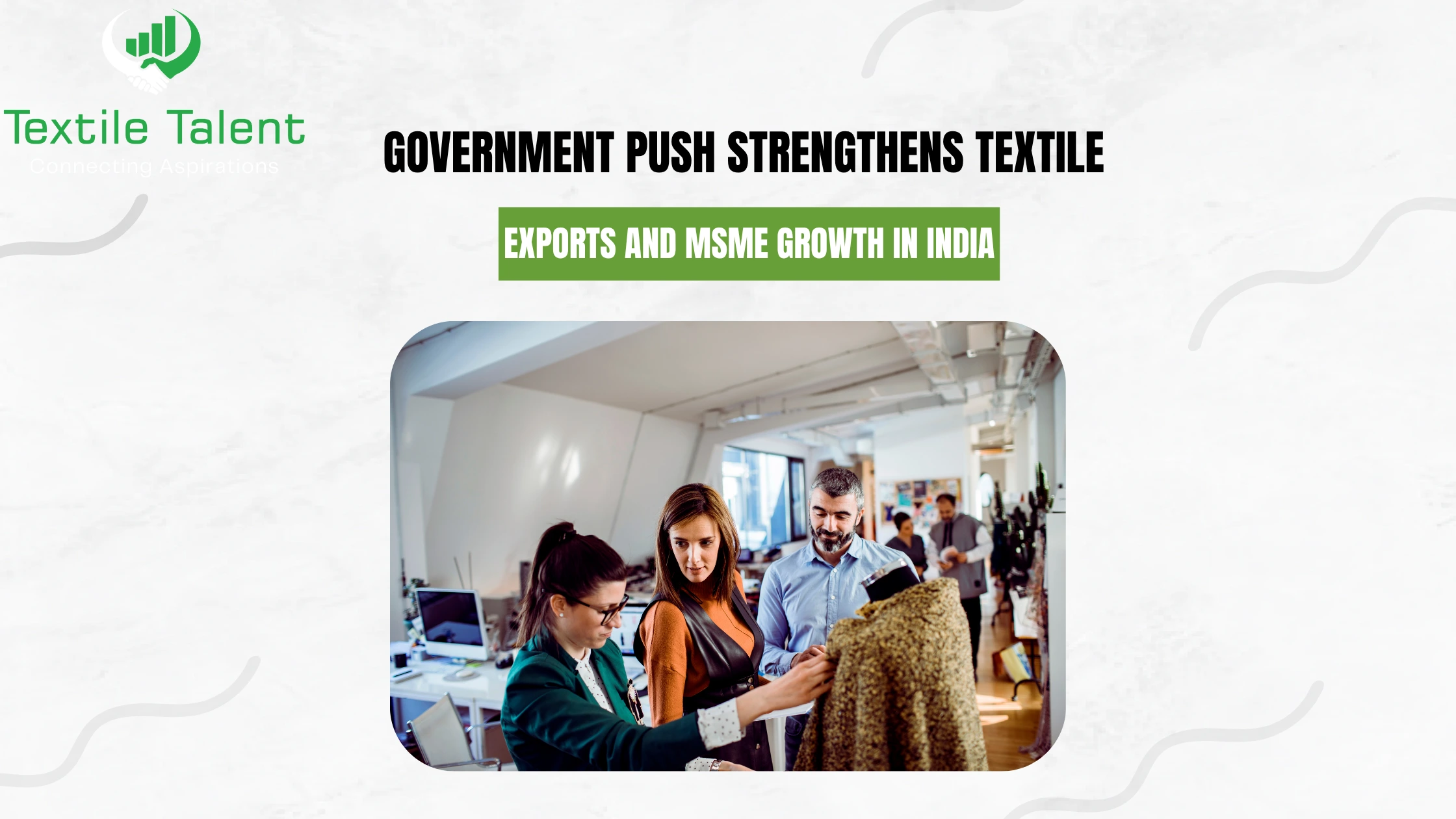

The textile industry in India, being one of the oldest and the most employment intensive industries is experiencing a new impetus by the government. Having a strategic focus on reinforcing Textile exports India and enhancing the growth of the MSMEs India, some policy initiatives and schemes are being put in place to promote global competitiveness of the industry. These steps are not only expected to improve export performance but also create significant opportunities for textile jobs across the country.
Rising Importance of Textile Industry in India
India Textile industry growth is attributed to the development of the country and its economy. Textiles are a very important sector that helps in sustaining rural livelihoods and small industries as a sector that contributes heavily to the GDP and employment. Micro, small and medium enterprises form a substantial part of this industry and there is an important priority to the policy aimed MSME export support.
In the past years, the government has realized the fact that there is a need to boost the power of Textile manufacturing India by targeting both the traditional and modern segments. Since handlooms to technical textiles, all the segments are being motivated to increase production and raise the standards of quality.
Government Schemes Driving Growth
In order to speed up Government arrangements in textile industry, a number of flagship programs have been started. The Production Linked Incentive (PLI) scheme to promote large-scale production and investments is one of the most effective ones. This plan encourages firms to produce more hence improving Export competitiveness India.
One other major project is the construction of PM MITRA textile parks which are meant to develop textile manufacturing world class infrastructure. These parks are likely to lower the logistics expenses and enhance efficiency and make the Indian products more competitive in the world market.
The government is also encouraging innovation by the Technical textiles mission, which targets high value goods in such areas of use as medical, military, and infrastructure. This initiative will diversify the exports of India and will boost Apparel exports India.
Boosting Export Competitiveness
India has made attempts to enhance Export competitiveness India focuses on enhancement of quality, reduction of costs, and diversification. The government is making sure that the smaller players are able to enter the global markets by supporting the contribution of MSME to exports India.
Government measures to increase textile exports have been designed as programs aimed at providing financial aid, facilitating easier access to credit, as well as export promotion programs. Such provisions are especially helpful with the small scale manufacturers who are usually struggling to scale their business.
The emphasis on the Expansion of the apparel and handcrafts exports are also assisting the traditional sectors to acquire international fame. As more people want more sustainable and handcrafted products, the handloom and handicraft industries of India are in a good position to take advantage of the world trends.
Strengthening MSMEs and Employment
One of the goals of these policies is to bring about inclusive growth through the development of MSME growth India. The textile industry is among the employers in the country and its growth will have a direct effect on employment.
The push for textile jobs is evident through skill development programs and training initiatives aimed at enhancing workforce capabilities. The government is training the sector to be able to meet the global standards and demand by investing in the human capital.
In addition, there are programs dedicated to the development of Handloom and handicrafts, which empower the rural artisans and help to maintain the traditional arts. This not only increases export but there are also sustainable livelihoods of millions of people.
Enhancing Manufacturing and Infrastructure
One of the pillars of the government is to improve Textile manufacturing India. Manufacturers are embracing advanced technologies due to the establishment of integrated textile parks and modernizing the current ones.
The priority on policies of Textile sector India 2026 is the vision of the long-term objective that will establish India as a textile hub globally. The alignment of policies to the international standards is expected to help the country attract the foreign investments and increase the market share in the country.
The supply chain is likely to be streamlined, cost of production is likely to be decreased and efficiency is likely to be enhanced through infrastructure development such as PM MITRA textile parks. This will eventually lead to the increased exports and improved profitability of the businesses.
Future Outlook for Textile Sector
The textile industry has a bright future, as it is heavily supported by the policy and has growing demand in different parts of the world. The Government measures of promoting exports of the textile industry and the target actions on MSMEs are forming an adequate growth ecosystem.
India is already making a progress towards becoming a global textile market leader following its constant attention to innovations, sustainability, and quality. The merger of the ancient skilled artistry and the new technology will also boost the competitiveness of the industry.
This vision will be made possible by the growth of Apparel exports India and expansion into new markets. Meanwhile, the fact that the focus is made on the export support of MSMEs makes sure that the advantages of growth are shared.
Verdict
To sum up, the aggressive strategy of the government to Textile exports India and MSME growth India is changing the industry into a vibrant and competitive global market industry. India is working on its main areas of concern and opening new opportunities through schemes such as Production Linked Incentive (PLI) scheme, PM MITRA textile parks, and Technical textiles mission.
The focus on textile jobs, infrastructure development, and export promotion is not only driving economic growth but also improving livelihoods across the country. With such attempts being undertaken, the textile industry will emerge as one of the biggest pillars of the Indian economic success story.
More Like This: India Charts a Path to Sustainable Textiles